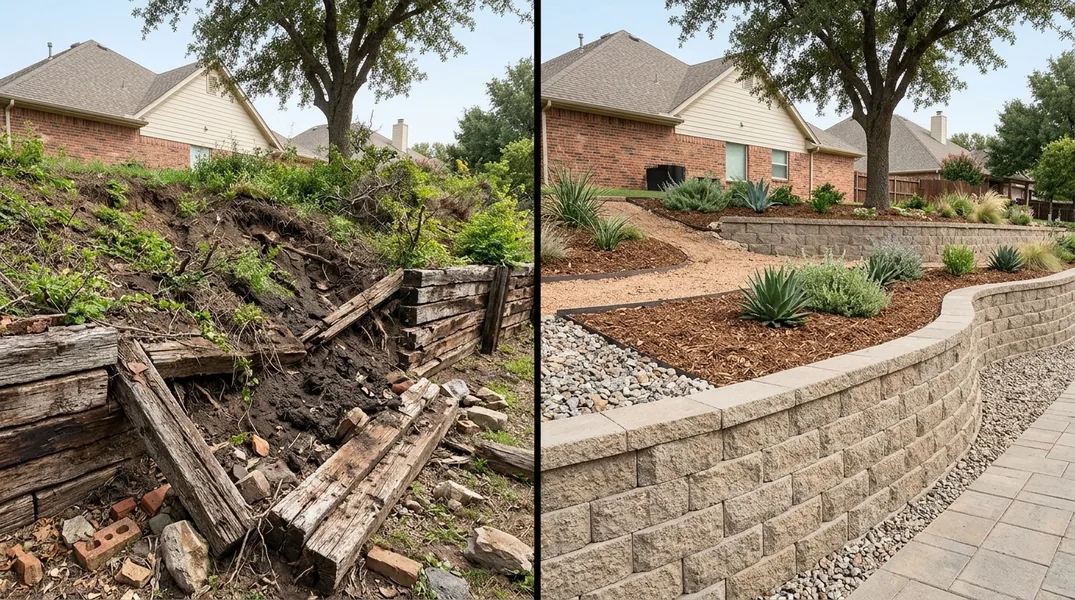
Understanding Dallas Soil Conditions and Retaining Wall Challenges
If you own property in Dallas, you already know that our soil presents unique challenges for landscaping and construction. The blackland prairie clay that dominates much of the area is expansive, meaning it swells when wet and shrinks when dry. This constant movement can wreak havoc on poorly designed or improperly installed retaining walls, leading to cracks, bulging, and eventual failure. Understanding your soil type is the first step toward choosing the right retaining wall material for your property.
Dallas creek lots add another layer of complexity. Properties adjacent to creeks or drainage areas experience seasonal water pressure changes, freeze-thaw cycles, and occasional flooding. These conditions demand retaining wall materials and installation methods that can withstand hydraulic pressure and moisture infiltration. When you're planning Retaining Wall Installation on a challenging lot, material selection becomes critical to long-term performance and cost savings.
Concrete Retaining Walls: Durability Meets Versatility
Concrete Retaining Walls are among the most popular choices for Dallas properties, and for good reason. Poured concrete offers exceptional strength and can be engineered to handle the expansive forces of blackland prairie clay. A properly designed concrete wall with adequate reinforcement and drainage systems can last 50 years or more, even in our challenging climate. Concrete's monolithic structure means there are no joints or gaps where water can infiltrate and cause problems, making it ideal for creek-adjacent properties where moisture management is essential.
The versatility of concrete is another major advantage. You can finish it smooth, textured, or colored to match your home's aesthetic. Concrete walls can be built to any height and curve, giving you design flexibility that other materials sometimes can't match. However, concrete does require proper installation with reinforcement, adequate drainage, and a solid foundation. This is why working with experienced professionals like Dallas Retaining Wall ensures your concrete wall is built to withstand Dallas' demanding soil and weather conditions. The pricing for concrete walls varies based on height, length, and site conditions, but the investment typically pays for itself through durability and minimal maintenance.
Segmental Retaining Walls and Block Systems for Flexibility
Segmental retaining wall systems, commonly called block retaining walls, offer a different approach that appeals to many Dallas homeowners. These modular systems use interlocking concrete blocks or stones stacked and reinforced with geogrid material. The beauty of segmental systems is their flexibility. Unlike rigid concrete, these walls can accommodate minor soil movement without cracking, which is particularly valuable on properties with expansive clay soils. If a section ever needs repair, you can often replace individual blocks rather than rebuilding an entire wall, making future maintenance more affordable.
A Retaining Wall Repair on a block system is typically straightforward compared to concrete wall repairs. The modular nature means you're not dealing with structural cracks that run through a monolithic pour. Block walls also offer excellent aesthetic options, from natural stone appearances to clean modern looks. For creek lots in Dallas, segmental walls with proper drainage and reinforcement perform well because the system's slight flexibility helps it adapt to seasonal water pressure fluctuations. When properly installed with adequate backfill and drainage, these walls can last 30 to 40 years in our climate.
Limestone Retaining Walls: Natural Beauty and Regional Appeal
Limestone is native to the Dallas area, and many homeowners are drawn to limestone retaining walls for their natural beauty and regional character. A limestone retaining wall can add significant curb appeal and architectural interest to your property. The stone's warm tones complement most Dallas homes, and the varied texture creates visual depth that manufactured materials sometimes lack. However, limestone requires careful consideration for structural applications, particularly on properties with significant elevation changes or expansive soil issues.
The primary concern with limestone walls is durability in our climate. While limestone is durable, it's softer than granite or concrete, and the freeze-thaw cycles of Dallas winters can cause spalling (surface flaking) over time. For creek lots where water exposure is constant, limestone may not be the best choice without additional protective measures. If you love the look of limestone, consider using it as a veneer over a concrete or segmental core for the best of both worlds. This hybrid approach gives you the aesthetic appeal while maintaining structural integrity. If you're considering a limestone wall, discuss the long-term implications with professionals who understand Dallas' specific conditions before committing to this material.
Drainage and Foundation: The Hidden Keys to Success
No matter which material you choose, proper drainage and foundation preparation are absolutely critical for retaining walls in Dallas. The expansive clay soils and seasonal water fluctuations mean that water management determines whether your wall will stand for decades or fail within a few years. Behind every properly installed retaining wall should be a drainage system that directs water away from the wall structure. This typically includes perforated drain pipe, gravel backfill, and sometimes a drainage board. Without these elements, hydrostatic pressure builds up behind the wall, pushing it forward and causing failure.
Foundation preparation is equally important, especially on blackland prairie clay. The foundation must be excavated to stable soil, compacted properly, and sometimes reinforced with gravel or concrete footings depending on wall height and soil conditions. Many retaining wall failures in Dallas result not from material choice but from inadequate foundation preparation. When you contact Dallas Retaining Wall at (469) 436-3386 for a free estimate, our team evaluates your soil conditions, water drainage patterns, and site-specific challenges to recommend the best material and installation approach. This professional assessment prevents costly mistakes and ensures your wall performs as expected for years to come.
Choosing the Right Material for Your Dallas Property
Your ideal retaining wall material depends on several factors specific to your property. Consider the wall's height, your budget, the aesthetic you want to achieve, and most importantly, your soil and drainage conditions. For maximum durability on blackland prairie clay with challenging drainage, Concrete Retaining Walls typically offer the best long-term performance. For properties where you want design flexibility and easier future repairs, segmental systems provide excellent value. Limestone works best as a veneer or for lower walls in well-drained locations.
The best way to make this decision is to have a professional evaluate your specific property. Every lot in Dallas has unique characteristics, and what works perfectly for your neighbor might not be ideal for your situation. Dallas Retaining Wall specializes in solving retaining wall challenges for properties throughout the Dallas area. Whether you're dealing with blackland prairie clay, a creek lot, or simply want to maximize your property's potential, our team can recommend the best material and installation method for your needs. Reach out today to discuss your project and get expert guidance tailored to your property's specific conditions.
Looking for a professional retaining wall contractor in Dallas? Dallas Retaining Wall responds fast for all your retaining wall needs.
Get a Free QuoteOur services: Retaining Wall Installation · Retaining Wall Repair · Retaining Wall Replacement