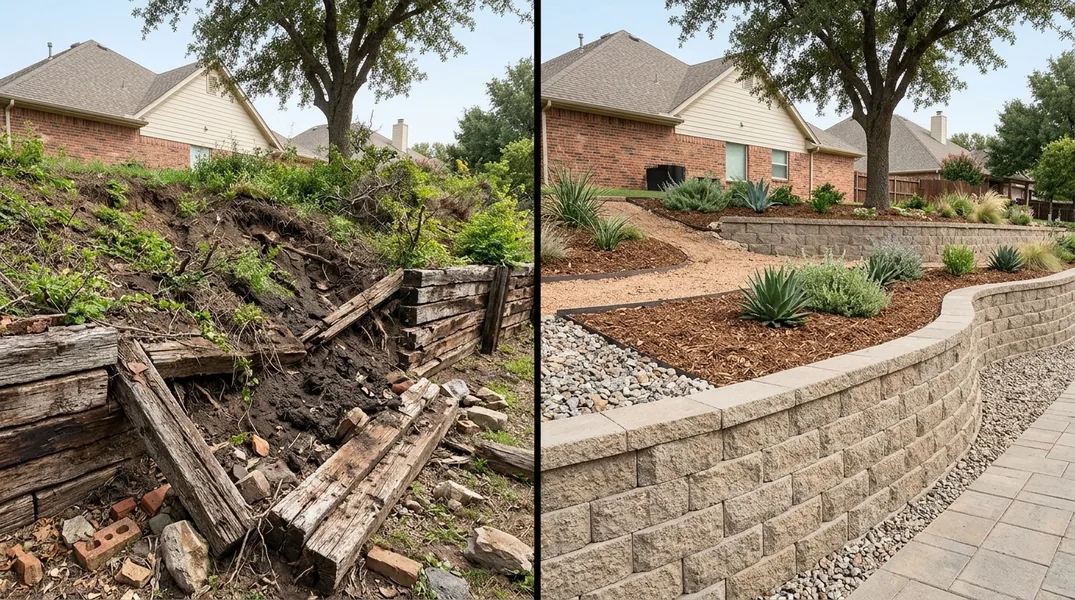
Why Spring Storms Threaten Your Retaining Wall
Spring arrives in Dallas with heavy rainfall, and while the season brings renewal to our landscape, it also brings serious challenges to retaining walls throughout the region. The combination of intense thunderstorms, saturated soil, and inadequate drainage systems creates a perfect storm for structural failure. Many homeowners don't realize that a retaining wall's greatest enemy isn't the weight of soil pressing against it, but rather the water trapped behind it.
When spring rains pound the Dallas area, water accumulates in the soil behind your retaining wall faster than it can drain away. This water buildup creates hydrostatic pressure, a force that pushes outward on the wall with tremendous power. Over time, this pressure causes the wall to bow, crack, lean, or eventually collapse. The problem is often invisible until significant damage has already occurred, which is why understanding retaining wall drainage is essential for every homeowner with these structures on their property.
Understanding Hydrostatic Pressure and Retaining Wall Failure
Hydrostatic pressure retaining wall damage is one of the most common reasons homeowners need Retaining Wall Repair services. To understand this concept, imagine filling a container with water. The deeper the water, the greater the pressure at the bottom. The same principle applies to soil saturated with water behind your retaining wall. As rainwater percolates through the soil, it increases the weight and pressure against the wall structure, pushing it outward with exponential force.
The problem intensifies in Dallas because our clay-heavy soil doesn't drain as efficiently as sandy or well-draining soil. When spring storms dump inches of rain within hours, the soil behind your retaining wall becomes oversaturated. Without proper drainage systems in place, this water has nowhere to go except to continue pushing against your wall. You might notice early warning signs such as slight bulging, small cracks, or water seeping through the wall face. These symptoms indicate that hydrostatic pressure is already working to destroy your retaining wall, and immediate attention is necessary to prevent catastrophic failure.
The Critical Role of Retaining Wall Drainage Systems
Proper retaining wall drainage is the single most important factor in preventing spring storm damage. A well-designed drainage system works like a safety valve, allowing water to escape from behind the wall before it can build up dangerous pressure. Without adequate drainage, even the strongest retaining wall will eventually fail under the relentless force of hydrostatic pressure. This is why professional Retaining Wall Installation always includes comprehensive drainage planning.
The most effective solution for managing water behind retaining walls is a retaining wall french drain. This system consists of a perforated pipe installed at the base of the wall, surrounded by gravel and a filter fabric. The french drain collects water that seeps through the soil and channels it away from the wall, preventing pressure buildup. When installed correctly, a retaining wall french drain can reduce hydrostatic pressure by up to 90 percent, dramatically extending the life of your wall and protecting your property from erosion and structural damage.
Many older retaining walls in Dallas lack proper french drain systems, which is why they become vulnerable during heavy spring rains. If your wall was built without modern drainage solutions, you may be at serious risk. The good news is that drainage improvements can often be added to existing walls, though this requires professional expertise to implement correctly without causing additional damage.
Signs Your Retaining Wall Drainage Has Failed
Recognizing the warning signs of drainage failure can help you take action before your retaining wall collapses. The most obvious indicator is water pooling or seeping through the wall face after rain. If you notice water streaming out of cracks or joints in your retaining wall, this means water has accumulated behind the wall and is seeking an escape route. Similarly, if the ground behind your wall remains soggy for days after rain, your drainage system isn't working effectively.
Other critical warning signs include visible bulging or bowing of the wall, horizontal cracks that run across the wall face, or vertical cracks that appear to be widening. You might also notice that soil behind the wall is eroding or that plants are dying in the area immediately behind the structure. These symptoms all indicate that hydrostatic pressure is actively damaging your wall. If you observe any of these signs, contact Dallas Retaining Wall at (469) 436-3386 for a professional assessment. Early intervention can prevent expensive Retaining Wall Replacement and protect your property investment.
Spring Storm Preparation: Protecting Your Retaining Wall
As spring storm season approaches, homeowners should take proactive steps to protect their retaining walls from drainage-related damage. First, inspect your wall carefully for existing cracks, bulging, or signs of poor drainage. Clear any debris from the top of the wall and ensure that surface water is being directed away from the structure rather than toward it. If your property has gutters and downspouts, make sure they're directing water away from the wall, not concentrating it in one area.
If your retaining wall lacks a french drain system, now is the time to consider installing one before the heavy spring rains arrive. This preventive approach is far more cost-effective than dealing with wall failure after a major storm. Contact Dallas Retaining Wall for a free estimate on drainage improvements. Our team can evaluate your current system, identify vulnerabilities, and recommend solutions tailored to your specific situation. Whether you need a new french drain installation, repairs to an existing drainage system, or a complete wall assessment, we're here to help protect your property.
When to Call a Professional for Retaining Wall Drainage Near Me
While some homeowners attempt DIY drainage solutions, retaining wall drainage is genuinely complex and requires professional expertise to get right. Improper installation can actually make problems worse by directing water in the wrong direction or creating new pressure points. If you're experiencing drainage issues with your retaining wall, the safest approach is to have a qualified contractor evaluate the situation and recommend appropriate solutions.
Dallas Retaining Wall specializes in diagnosing and fixing drainage problems that threaten retaining wall integrity. Our team understands the specific soil and climate conditions that make drainage failures so common in the Dallas area. We can design and install effective french drain systems, repair existing drainage infrastructure, or recommend Retaining Wall Repair solutions if damage has already occurred. Don't wait until spring storms cause catastrophic failure. Call us today at (469) 436-3386 to discuss your retaining wall's drainage needs and protect your property for years to come.
Looking for a professional retaining wall contractor in Dallas? Dallas Retaining Wall responds fast for all your retaining wall needs.
Get a Free QuoteOur services: Retaining Wall Installation · Retaining Wall Repair · Retaining Wall Replacement