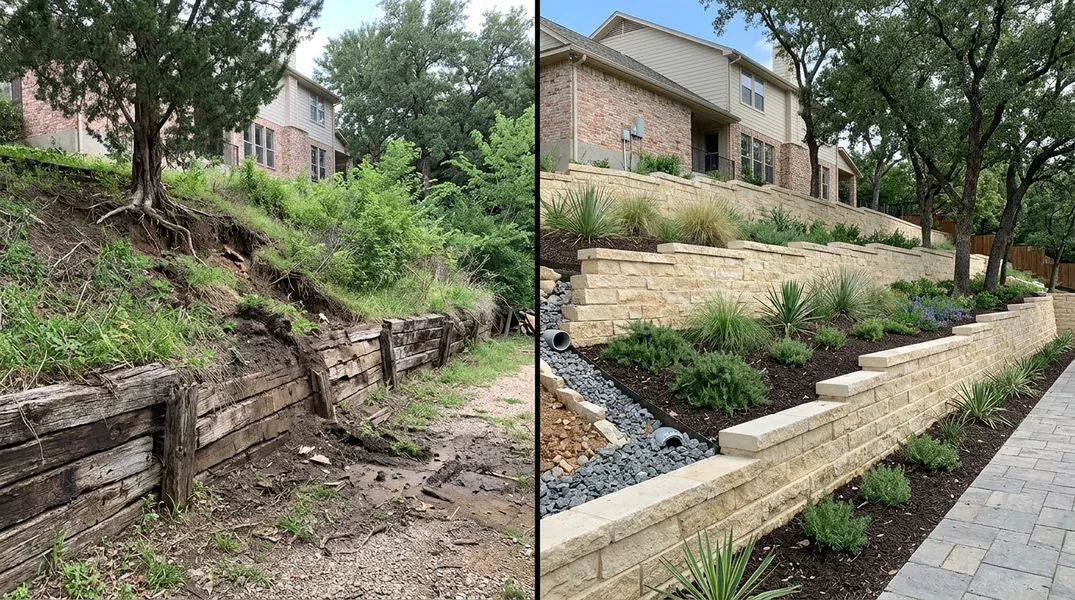
Signs Your Retaining Wall Is in Trouble
A leaning retaining wall is more than just an eyesore. It's a structural problem that can worsen quickly, especially in the North Texas climate where heavy rains, clay soil expansion, and temperature swings put constant stress on landscape structures. If you've noticed your retaining wall tilting away from the soil it's meant to hold back, that's your first red flag that professional attention is needed.
Beyond the obvious lean, watch for other warning signs. Horizontal cracks running across the wall surface indicate internal stress and shifting. Vertical or diagonal cracks suggest the wall is separating or settling unevenly. If you see water pooling behind the wall or seeping through the surface, drainage problems are compounding the structural issues. Bowing or bulging in the middle of the wall means the soil pressure has become too great for the structure to handle. Any of these conditions should prompt you to call a professional for an honest assessment.
Why Retaining Walls Lean and Fail in Dallas
Understanding why your retaining wall is leaning helps you make the right repair or replacement decision. In Dallas, the primary culprit is soil composition. North Texas is dominated by expansive clay soils that absorb water and swell, then dry out and shrink. This constant movement places enormous lateral pressure on retaining walls, pushing them outward over time. Poor drainage behind the wall accelerates this problem by keeping the soil saturated and increasing its weight and pressure.
Installation mistakes also play a major role. If the wall wasn't built with adequate drainage, proper compaction, or sufficient depth, it will fail prematurely. Inadequate reinforcement, incorrect backfill material, or improper slope and alignment all contribute to leaning walls. Age is another factor. Older walls, especially those built decades ago without modern engineering standards, are more prone to failure. Environmental factors like tree root growth, erosion, and freeze-thaw cycles in winter further compromise structural integrity over time.
When to Repair vs. Replace Your Retaining Wall
Retaining Wall Repair makes sense when the damage is localized and the wall's overall structure is still sound. If you're seeing a few cracks but the wall isn't severely leaning, if water damage is manageable, or if the lean is minor and recent, repair may restore years of service life. Repair typically addresses the immediate problem without the full expense and disruption of a complete rebuild. This is often the right choice for walls that are less than ten years old or that have suffered specific, identifiable damage.
Retaining Wall Replacement becomes necessary when the wall has lost structural integrity beyond practical repair. Severe leaning (more than a few inches of tilt), extensive cracking, deep water damage, or age-related deterioration all point toward replacement. If the wall is failing because of poor original installation or inadequate design for North Texas soil conditions, replacement with modern engineering and proper drainage is the only lasting solution. A failing wall poses safety risks to your property and neighbors, making replacement the responsible choice.
Evaluating the Condition: What a Professional Assessment Reveals
Before you commit to repair or replacement, a professional inspection is essential. A qualified contractor will examine the degree and direction of the lean, measure crack widths and patterns, check soil conditions behind the wall, and assess drainage. They'll look at the wall's age, materials, original construction depth, and reinforcement. This comprehensive evaluation reveals whether the wall is salvageable or whether replacement is the only practical option. Many homeowners are surprised to learn that what looks like a minor problem is actually a sign of deeper structural failure.
During an assessment, professionals also consider your budget, timeline, and long-term goals. A wall that could theoretically be repaired might not be worth the cost if replacement would provide better value and durability. Conversely, a wall showing early signs of trouble might benefit from preventive repairs that extend its life significantly. Getting a free estimate from Dallas Retaining Wall gives you clear information about your options without obligation. Call (469) 436-3386 to schedule an inspection and receive expert guidance tailored to your specific situation.
Retaining Wall Repair and Replacement Cost in Dallas: What to Budget
The cost of addressing a leaning retaining wall varies widely depending on the wall's size, materials, severity of damage, and whether you choose repair or replacement. Retaining Wall Repair typically ranges from a few hundred dollars for minor crack filling and drainage improvements to several thousand for more extensive work like installing new drainage systems, reinforcing sections, or addressing soil issues. Retaining Wall Replacement costs more but provides a fresh start with modern materials and engineering. Concrete Retaining Walls and other durable materials offer different price points and longevity profiles.
To understand pricing specific to your project, it's important to get quotes from experienced local contractors who understand North Texas soil and climate challenges. A contractor familiar with Dallas conditions will factor in proper drainage, appropriate materials, and building methods that stand up to our climate. Don't choose based on price alone. The cheapest repair today might mean expensive replacement in five years. Investing in quality work from a reputable company protects your property value and safety long-term.
Next Steps: Getting Professional Help Near You
If you're noticing a lean, cracks, or other signs of trouble in your retaining wall, don't wait for the problem to worsen. Water damage, soil instability, and structural failure accelerate quickly, especially in our North Texas climate. Reaching out to Dallas Retaining Wall for a professional evaluation is the smart first step. Our team has years of experience diagnosing retaining wall problems and recommending the most cost-effective and durable solutions for homeowners throughout the region.
Contact Dallas Retaining Wall today at (469) 436-3386 or visit our contact page to request a free estimate. We'll assess your wall, explain your repair and replacement options, and provide transparent pricing so you can make an informed decision. Whether your retaining wall needs targeted repairs or a complete replacement, our goal is to restore stability, protect your property, and give you peace of mind.
Looking for a professional retaining wall contractor in Dallas? Dallas Retaining Wall responds fast for all your retaining wall needs.
Get a Free QuoteOur services: Retaining Wall Installation · Retaining Wall Repair · Retaining Wall Replacement